
We remember the 1990s as a golden age of gaming, with seven iconic games reshaping the industry forever. Super Mario 64 introduced 3D adventures, while Ocarina of Time changed game storytelling through immersive narratives. Sonic’s speed gave games exciting energy, and Final Fantasy VII revolutionized role-playing games. Street Fighter II made competitive fighting popular, and GoldenEye 007 defined local multiplayer shooters. Each game brought new ideas, setting the stage for today’s gaming world. Keep exploring to uncover how these classics made their mark.
Quick Tips
- Super Mario 64 introduced immersive 3D adventure gaming with free exploration and a smooth camera system.
- Ocarina of Time revolutionized storytelling with emotional narratives, player-driven outcomes, and innovative music use.
- Sonic the Hedgehog defined fast-paced gameplay and iconic character design appealing to youth culture.
- Street Fighter II popularized competitive fighting games with balanced characters and skill-based play.
- GoldenEye 007 set new standards for multiplayer shooters with diverse weapons, memorable maps, and split-screen mode.
How the 1990s Pioneered Modern Gaming Innovations
Even though gaming existed before the 1990s, that decade truly shaped the way we play today.
During this time, developers introduced new technologies like improved graphics and sound, making games more immersive and exciting. We saw the rise of handheld consoles, letting us play anywhere, and the birth of early multiplayer modes, which made gaming a social experience.
Developers experimented boldly with storytelling, giving us deeper plots and memorable characters. These innovations laid the groundwork for modern gameplay, merging technology and creativity.
Together, these advancements helped gaming grow from a simple pastime into a vibrant, dynamic world we still enjoy now. Just as the 90s transformed entertainment for players, thoughtful gifts for graduates continue to celebrate milestones that shape our lives.
How Super Mario 64 Launched 3D Adventure Gaming
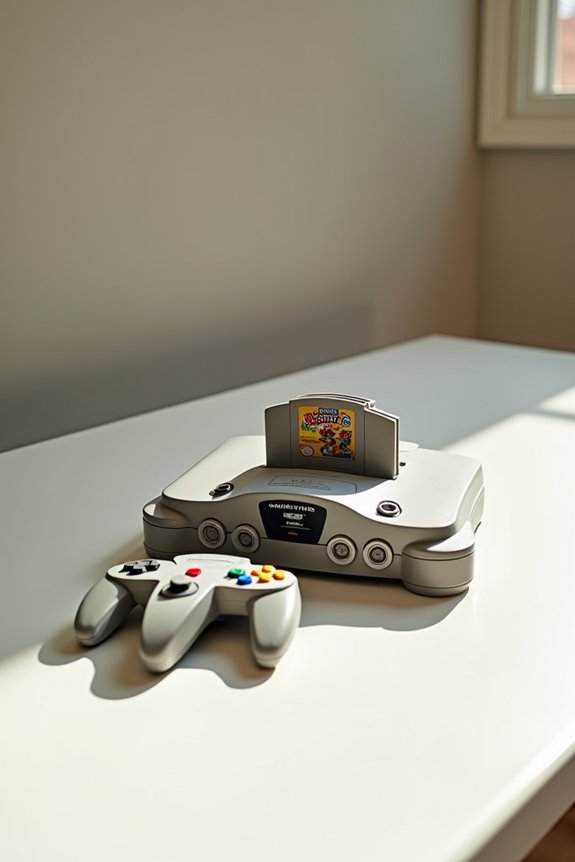
When 3D gaming first appeared, Super Mario 64 quickly showed us how magical it could be.
This game opened a brand-new world where we could jump, run, and explore freely in three dimensions, not just side to side. It introduced a clever camera system that followed Mario smoothly, making navigation easier.
The controls felt natural, letting us try different moves and strategies without confusion.
Super Mario 64 set the standard for 3D adventure games, proving that immersing players in vivid, interactive environments was exciting and fun.
Just as stylish decorations can transform an ordinary evening into an unforgettable experience, this game transformed how we interacted with digital worlds.
It truly changed how we play and imagine video games.
How Ocarina of Time Changed Game Storytelling Forever
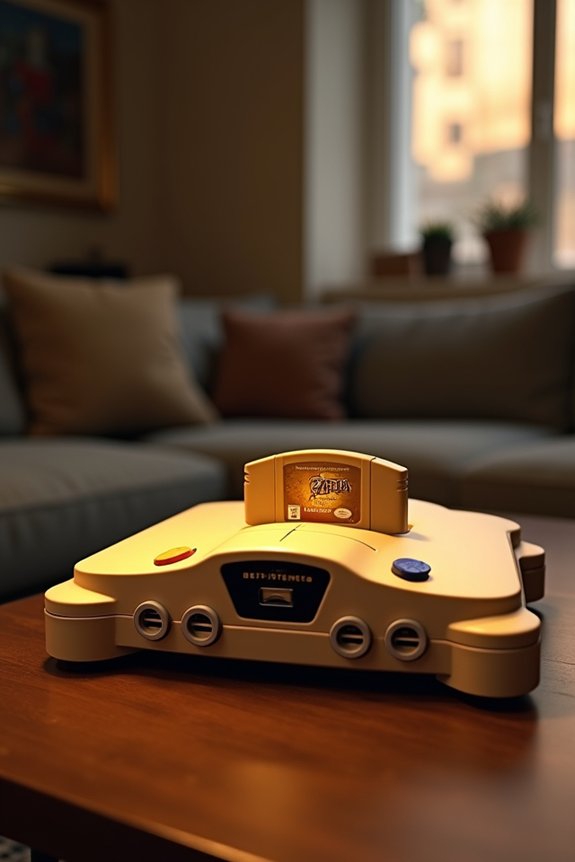
While Super Mario 64 showed us the wonders of exploring in a 3D world, The Legend of Zelda: Ocarina of Time took storytelling to a whole new level.
It introduced a rich, immersive narrative where our actions shaped the journey, creating emotional connections with characters and the world. The game’s shifting timelines and clever use of music deepened the experience, making us feel truly part of an epic quest.
Ocarina of Time taught game creators how to blend gameplay with storytelling, setting a standard for future adventures that invite us to not just play, but live the story. Just as party decorations enhance the atmosphere of an event, environmental design and visual storytelling in Ocarina of Time elevated the player’s emotional immersion in the game world.
Why Sonic Defined ’90s Speed and Style in Gaming

Because speed and style were at the heart of gaming in the ’90s, Sonic the Hedgehog quickly became more than just a character — he was a symbol of an exciting new era.
Sonic’s fast-paced gameplay brought a fresh energy, pushing players to react swiftly and think quickly. His cool design, with vibrant colors and attitude, captured the spirit of youth and rebellion.
The levels were crafted for thrilling speed runs, encouraging exploration without slowing down.
Sonic wasn’t just a game; he defined how we experienced excitement in that decade’s gaming landscape, blending speed, style, and fun perfectly. Much like how rustic party decorations bring nostalgic charm to modern celebrations, Sonic brought a timeless appeal that continues to influence gaming culture today.
How Final Fantasy VII Revolutionized ’90s RPGs
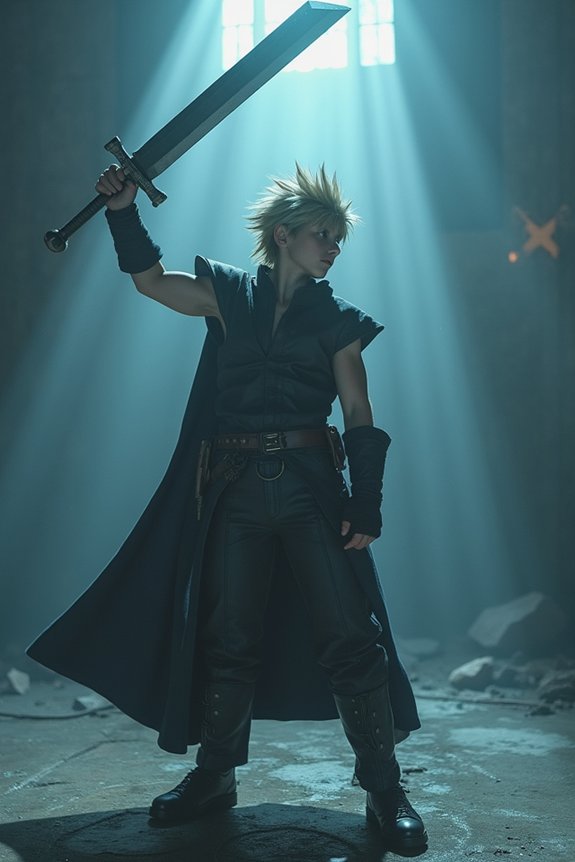
Sonic’s high-speed action showed us how much energy a game could pack into fast-moving thrills, but the ’90s also brought a game that changed the way stories and worlds felt in RPGs.
Final Fantasy VII pushed boundaries by blending rich storytelling with immersive 3D graphics, pulling us deeper into its universe. It introduced us to complex characters and unforgettable music, all wrapped in an epic quest.
We got drawn by:
- Detailed cinematic scenes that felt like movies
- A vast, explorable world full of secrets
- A revolutionary materia magic system
- Emotional narratives that made us care deeply
It truly redefined RPGs for a generation. This same era saw gaming culture expand beyond just digital adventures, with fans creating immersive experiences like murder mystery party decorations that brought gaming narratives into real-world entertainment.
How Street Fighter II Made Competitive Fighting Popular
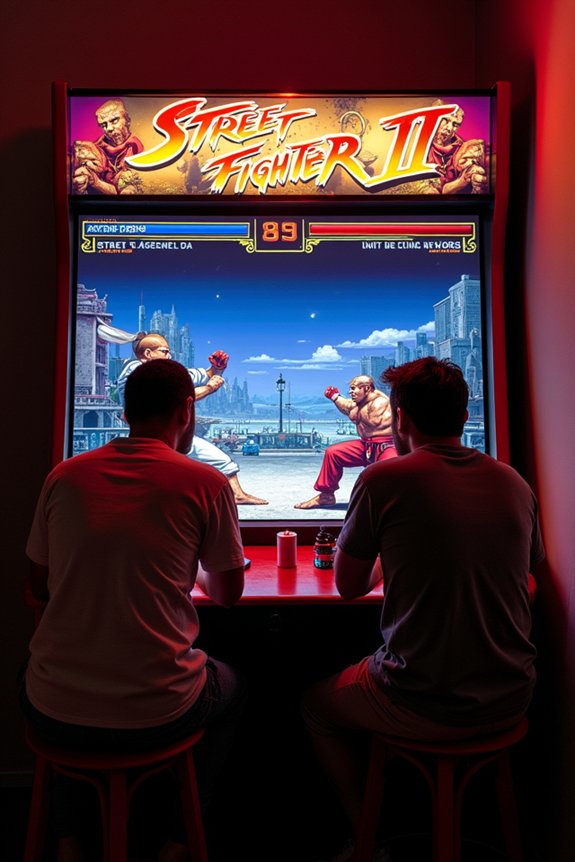
When Street Fighter II hit arcades in the early ’90s, it didn’t just offer exciting battles—it sparked a worldwide craze that brought competitive fighting into the spotlight like never before.
Players mastered unique characters, learning combos and strategies that rewarded practice and skill.
The game’s design encouraged face-to-face matches, fueling rivalries and friendships alike, turning arcades into buzzing hubs of fierce competition.
Its balanced gameplay and accessible controls invited newcomers while challenging veterans, laying the foundation for modern esports.
Street Fighter II showed us how thrilling and engaging competitive fighting games could be, shaping this genre’s future forever.
Why GoldenEye 007 Set the Standard for Multiplayer Shooters
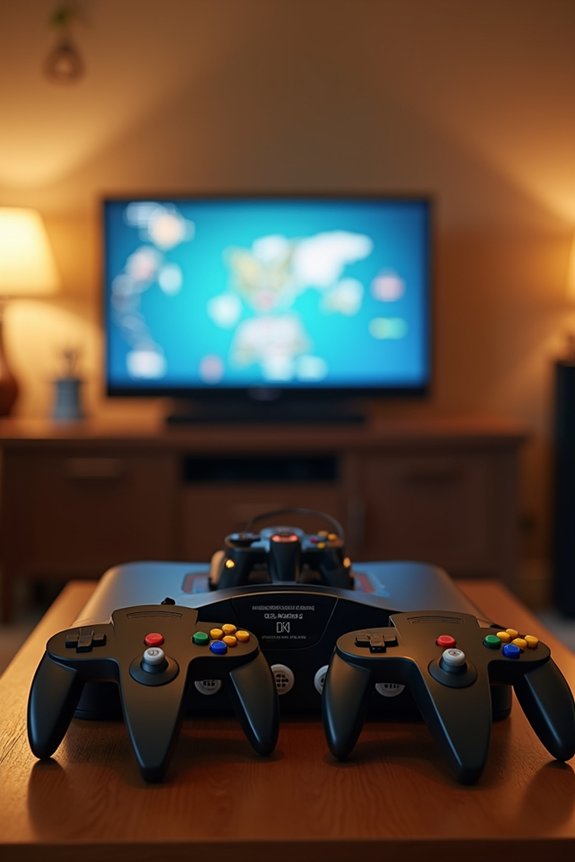
Although many games existed before it, GoldenEye 007 redefined multiplayer shooters in ways that still influence us today.
It introduced memorable maps that sparked endless fun, and its diverse weapon selection kept matches exciting. The game’s smooth controls made gameplay accessible, welcoming players of all skill levels.
Plus, the split-screen mode fostered friendly competition and bonding among friends. Together, these features set a high bar, showing how shooters could be both strategic and social.
Here’s what made GoldenEye 007 stand out:
- Engaging, well-designed multiplayer maps
- Wide variety of weapons and tactics
- Intuitive controls for all players
- Split-screen mode promoting local play
Frequently Asked Questions
What Hardware Was Most Popular for Gaming in the 90S?
When it came to gaming in the ’90s, consoles like the Super Nintendo, Sega Genesis, and PlayStation were the cream of the crop. We all dove into these systems, making them our go-to for endless fun.
Which 90S Games Had the Best Soundtracks?
We think games like Final Fantasy VII, Sonic the Hedgehog, and The Legend of Zelda: Ocarina of Time had the best soundtracks. Their music’s still unforgettable, bringing nostalgia and emotion that deeply connect us with those classic adventures.
How Did 90S Gaming Influence Arcade Culture?
We saw 90s gaming fuel arcade culture by sparking friendly competition and social gatherings. Those vibrant, addictive games kept us coming back, turning arcades into buzzing hubs where we all shared excitement and unforgettable moments together.
What Were Common Gaming Accessories in the 1990S?
We often used gamepads, light guns, and memory cards for saving progress. Joysticks were popular too, especially for flight and arcade games. Many of us also enjoyed using turbo controllers for extra button speed.
Were There Any Controversial Games in the 90S?
Yes, we saw games like Mortal Kombat spark controversy due to graphic violence. They made us question content ratings and censorship, shaping how the industry handles mature themes even today. It was a heated debate!