

Kwanzaa centers on celebrating African heritage through values like unity, self-determination, and collective work, which help us build stronger communities. We honor our roots by sharing stories, traditions, and cultural pride, while lighting the Kinara candles to reflect each night. Gift-giving and feasting bring warmth and gratitude to our gatherings. These themes strengthen identity and connection, showing how Kwanzaa is more than a holiday—it’s a joyful way to support and uplift one another. There’s much more to explore about its rich customs and impact.
Quick Tips
- Kwanzaa centers on unity and community strength through the principle of Umoja.
- It celebrates African heritage, culture, and pride in diverse traditions.
- The Nguzo Saba principles guide personal responsibility and collective progress.
- Lighting the Kinara symbolizes reflection on core values each night.
- Shared meals, gift-giving, and decorations foster family bonds and gratitude.
The Origins and Purpose of Kwanzaa
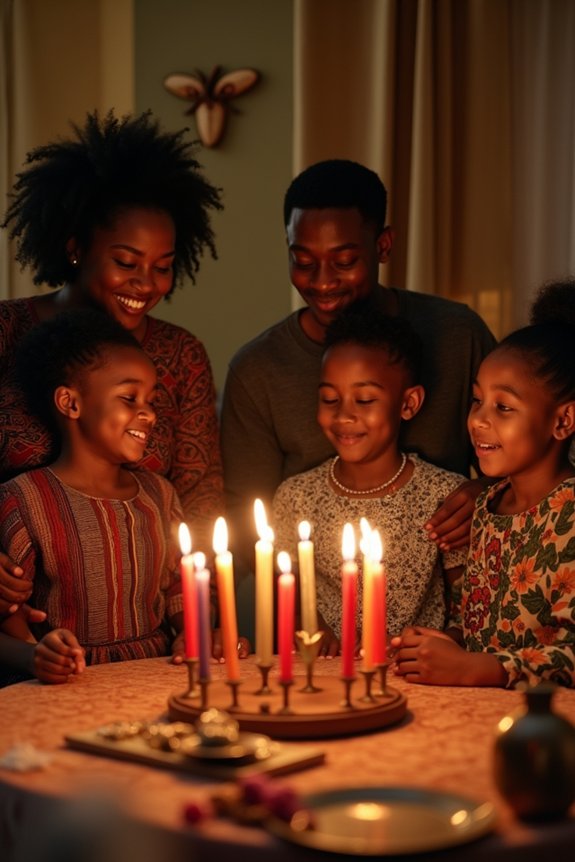
Kwanzaa is a holiday with a meaningful purpose that brings people together to celebrate African heritage and culture. It began in 1966, created by Dr. Maulana Karenga, who wanted to unite African Americans and honor their roots during a time of social change.
The celebration lasts seven days, encouraging reflection, family, and community bonding. It’s not about religion but about pride and connection. By coming together to observe Kwanzaa, we share stories, values, and traditions that strengthen identity.
This holiday welcomes us all to embrace history and look forward with hope and joy. During this festive season, many families enhance their celebrations with festive decorations that reflect the beauty and significance of their heritage.
The Seven Principles (Nguzo Saba) of Kwanzaa
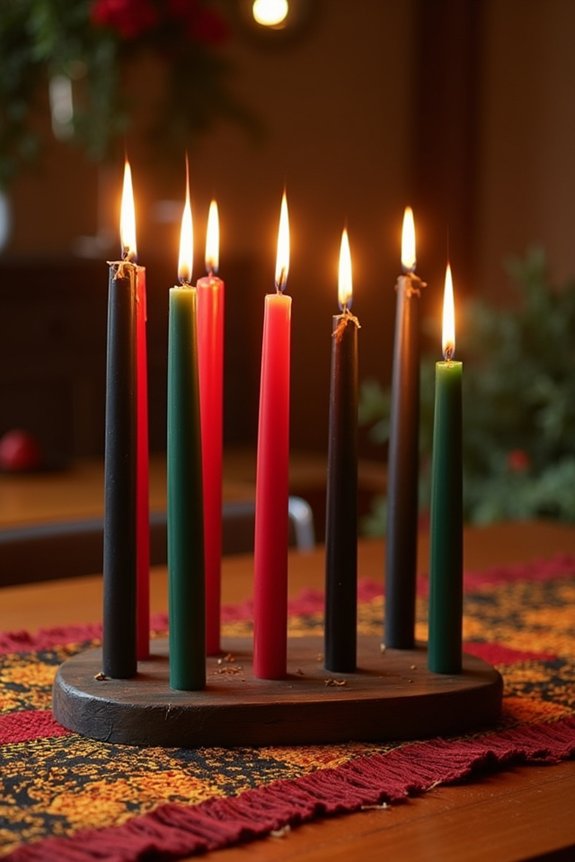
The Seven Principles, known as the Nguzo Saba, guide us during this special celebration and beyond, offering powerful values that help build strong families and communities.
These principles inspire us to work together, honor our heritage, and grow in unity and purpose.
Here are four key ones we embrace:
- Umoja (Unity) – Keeping our community strong by sticking together.
- Kujichagulia (Self-Determination) – Choosing our path with pride.
- Ujima (Collective Work and Responsibility) – Helping each other solve problems.
- Ujamaa (Cooperative Economics) – Supporting each other economically to build wealth.
Together, they light our way forward. Display stunning decorations throughout your home to reflect these meaningful principles during your Kwanzaa celebration.
Why Kwanzaa Honors African Heritage and Culture
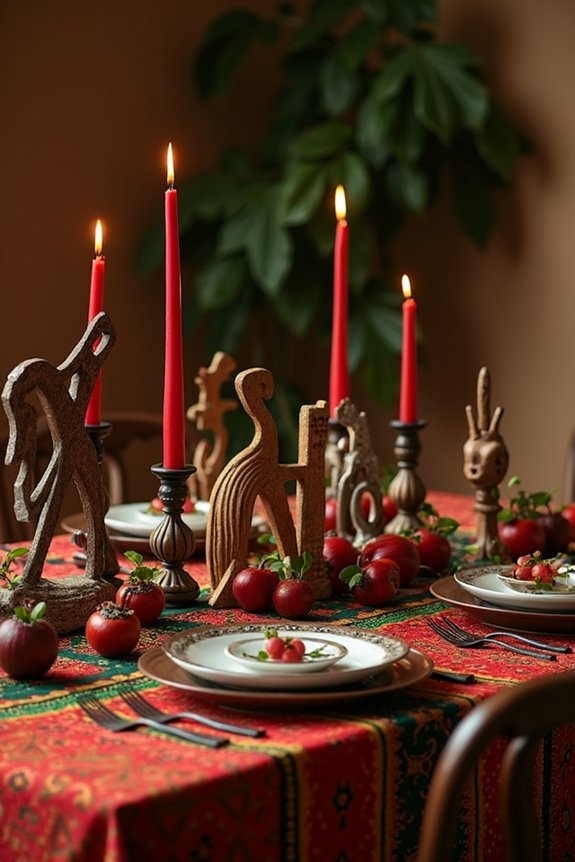
Embracing the Seven Principles helps us see how this celebration goes beyond just values—it honors a rich and vibrant history that connects us all.
Kwanzaa celebrates African heritage by shining a light on traditions, stories, and struggles that shape who we’re today. It reminds us to cherish our roots and the wisdom passed down through generations.
This holiday encourages pride in our diverse cultures while promoting unity and strength. Like portable designs that enhance convenience, Kwanzaa’s emphasis on accessibility ensures that African heritage celebrations can be shared and experienced by communities everywhere.
Common Kwanzaa Traditions and Their Meanings
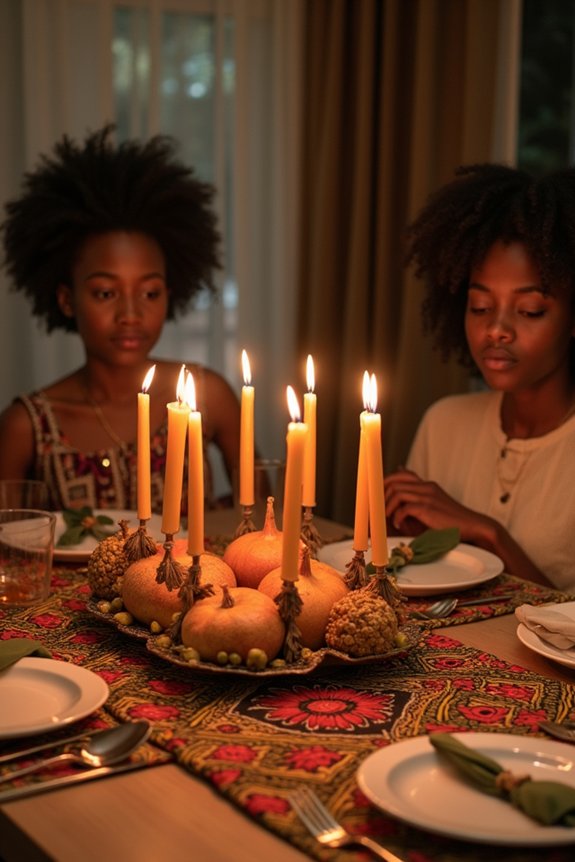
Many meaningful traditions come together during this special celebration, each carrying a unique story and purpose that helps us connect more deeply with our heritage.
Let’s explore four common Kwanzaa traditions and their meanings:
- Lighting the Kinara – We light one candle each night to honor the seven principles of Kwanzaa, fostering reflection and unity.
- Displaying the Mkeka – This mat symbolizes our foundation and history.
- Sharing a Zawadi – Gift-giving celebrates achievement and encourages growth.
- Enjoying a Karamu feast – This joyful meal brings us together in gratitude and community spirit.
These traditions enrich our connection. You can also enhance your Kwanzaa celebration with creative decorations that beautifully represent the holiday’s values and bring festive spirit into your home.
Kwanzaa’s Impact on Community Strength and Identity
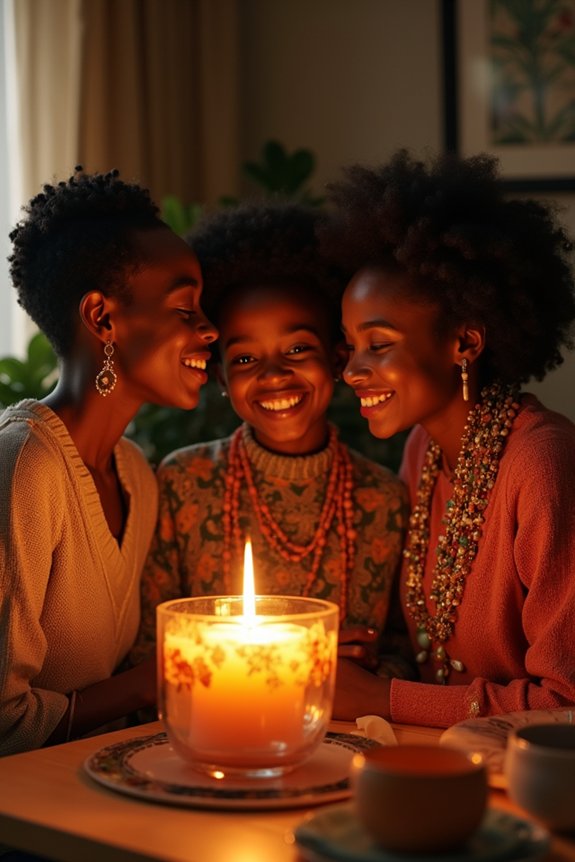
As we cherish the meaningful traditions of Kwanzaa, we can see how they do more than honor the past—they bring us closer as a community and strengthen our sense of who we are.
By celebrating shared values like unity and self-determination, Kwanzaa encourages us to support one another and build lasting bonds.
This collective spirit helps us understand our roots and inspires pride in our cultural identity.
When we come together during Kwanzaa, we not only preserve history but also create a strong, caring network that uplifts everyone, enriching both individuals and the whole community.
Like other cultural celebrations, Kwanzaa shares the power of vibrant decorations to enhance our festive gatherings and create meaningful spaces for connection.
Frequently Asked Questions
How Do Different Countries Outside the U.S. Celebrate Kwanzaa?
We see different countries outside the U.S. celebrating Kwanzaa with community gatherings, music, and traditional meals. They often blend their local customs with Kwanzaa’s principles, creating unique, vibrant celebrations that honor African heritage together.
What Types of Music Are Traditionally Played During Kwanzaa?
We usually enjoy traditional African drumming, jazz, and gospel music during Kwanzaa. These rhythms create a lively, soulful atmosphere that connects us to our roots and helps us celebrate together with joy and unity.
Are There Specific Foods Eaten Only at Kwanzaa Celebrations?
We don’t eat exclusive foods, but traditional dishes like black-eyed peas, collard greens, and sweet yams make Kwanzaa meals special. These flavors connect us, celebrate heritage, and bring warmth to our gathering’s vibrant spirit.
How Can Schools Incorporate Kwanzaa Into Their Curriculum?
We can incorporate Kwanzaa by exploring its history, traditions, and cultural significance through lessons, art projects, and storytelling. Let’s celebrate diversity and encourage students to share their experiences and reflections during this vibrant holiday.
What Is the Significance of the Kwanzaa Symbols and Colors?
Did you know 70% of adults recognize Kwanzaa’s symbols? We see the colors red, black, and green represent struggle, unity, and hope. These symbols connect us deeply to heritage, culture, and collective strength during celebrations.